


The result
A 61.38 kWp solar and battery system designed to help a high-energy-use dairy and arable farming business reduce its reliance on grid electricity.
The system is estimated to generate 53,494 kWh a year, deliver an approximately £13,784 financial benefit in year one and achieve a five-year payback, while making productive use of the available roof area within the site’s DNO constraints.
At a glance
Location
Sector
Dairy & arable farming
System Size
61.38 kWp
Panels
132 × AIKO 465W
Battery Storage
64.28 kWh
Existing Use
Approx. 190,000 kWh/year
EST. Generation
53,494 kWh/year
Est. Year-one Benefit
Approx. £13,784
Est. Payback
5 years
Est. CO₂ Reduction
10,947 kg/year
Demand Covered
Approx. 27%
Est. Payback
Approx. 98%
The client’s objective
The Cooke Partnership operates a dairy and arable farming business using approximately 190,000 kWh of electricity per year. The site already had smaller solar arrays, but the client wanted a substantially larger installation that could make a more meaningful contribution to reducing ongoing electricity costs.
The aim was therefore to increase on-site generation and energy independence while designing a system that made commercial sense for a high-consumption agricultural operation.
The Phase Energy solution
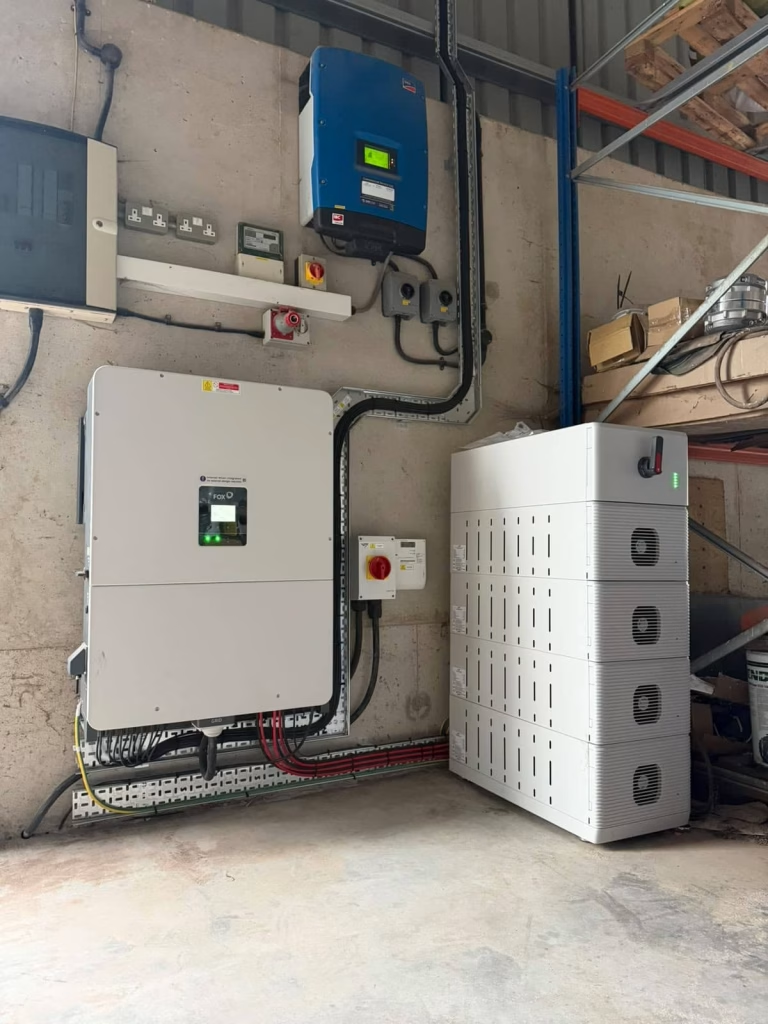
Phase Energy designed a 61.38 kWp solar PV system using 132 AIKO Neostar 465W panels. The array was paired with a Fox ESS H3 50 kW hybrid inverter and four Fox Q16 battery modules, providing a stated total storage capacity of 64.28 kWh.
The battery system gives the business greater opportunity to retain and use solar energy on site rather than relying entirely on immediate consumption or export.
Why the system was designed this way
The initial ambition was for a much larger installation, with an application made for approximately 150 kW of generation. Because of existing generation on the site, the DNO limited the additional generation capacity to 50 kW.
The client preferred to use the selected barn, so the final design maximised the available roof space while remaining within the agreed grid constraints. The battery configuration started with the minimum four modules required for this setup, allowing performance to be monitored before deciding whether additional storage would be worthwhile later.

Installation
The installation was completed over approximately four days. No unusual access or installation challenge was recorded for the physical installation itself; the more significant design constraint was agreeing a viable system size within the DNO limit.
Predicted energy and financial performance
The system is estimated to generate approximately 53,494 kWh per year. Based on the proposal-stage
assumptions supplied, Phase Energy estimated a combined first-year financial benefit of approximately £13,784 and a payback period of around five years.
Approximately 27% of the site’s existing annual electricity consumption is expected to be covered by the solar installation, with around 98% of generated solar electricity predicted to be consumed on site. The estimated annual CO₂ reduction is 10,947 kg.
All generation, financial, consumption and carbon figures are estimates rather than guarantees. Actual results will depend on weather, operating patterns, tariffs and future energy use.
Finance
The client chose to use finance for the project.
More Commercial Solar Projects
See some more examples of happy client projects below
-
Commercial Solar Installation for Britelite Windows, Maidstone
A commercial solar system predicted to generate 45,802 kWh a year with a 3–4 year…
-

Commercial Solar Installation at Frith Farm, Tadley, Hampshire
A 71.76 kWp farm solar system predicted to generate 66,039 kWh a year with a…
-

Commercial Solar Installation for a Farm in Malton, North Yorkshire
Estimated to generate 21,259 kWh a year with a five-year payback.